 ×
Cooling down outdoors is not the same as cooling down on the daily commute. A commute is muggy; the outdoors is an oven. With direct sun, heat reflecting off the ground and no wind, the perceived temperature can run several degrees above the forecast. A fan is limited by battery life, a cooling patch covers only a small area, and a spray bottle is a hassle at security checks. A reusable, alcohol-free outdoor cooling wipe whose cooling data is backed by third-party testing solves a lot of real problems outdoors. This article breaks down the Mirodear alcohol-free cooling wipe on three fronts: cooling performance, safety, and real-world outdoor scenarios.
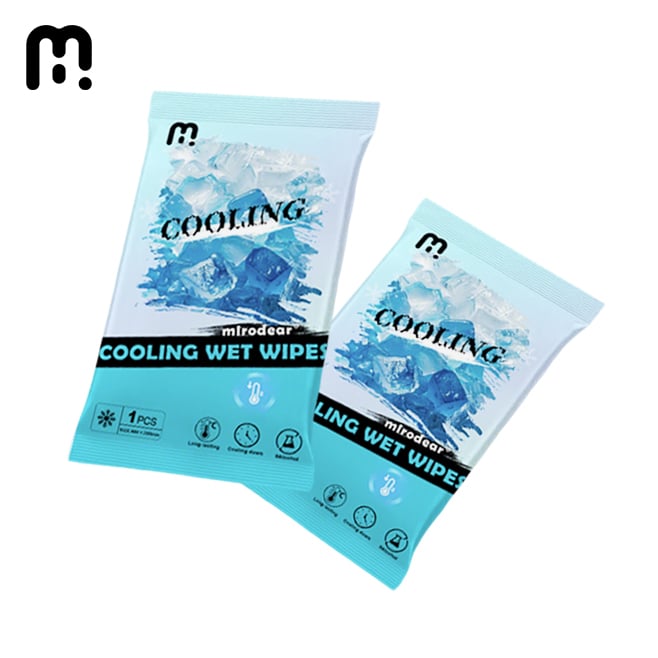
The cooling data is backed by third-party testing. Both laboratories reached the same conclusion:
Testing laboratory |
Test result |
Report reference |
Hangzhou Gaoqi |
Skin-surface temperature drop of about 4.5 °C after wiping |
Tested 27 March 2026 |
Hangzhou Saiwei |
Skin-surface temperature drop of about 4.5 °C after wiping |
SW-TR-26042701 |
Both laboratories tested under identical conditions and both reported a drop of about 4.5 °C. Cross-verification rules out the bias a single test source can introduce. That figure puts the product in the top tier of the cooling-wipe category, where most products on the market sit between 3 °C and 4.8 °C. Placed on the neck, the cooling spreads within about 3 seconds, and the effect is especially noticeable under direct sun.
Time point |
Cooling state |
Immediately after application |
Cooling spreads within about 3 seconds and penetrates evenly |
First few minutes |
Strongest cooling; rapid temperature-drop phase |
Then up to about 3 hours |
Steady and continuous, with no gaps |
How the cooling sensation changes: the first few minutes are the peak, after which it falls back naturally from peak into a steady output phase — peak intensity is not held for the whole 3 hours. The cooling itself never stops, though; unlike alcohol products, it does not cut out after ten-odd minutes. On a hike or a ride you do not need to stop and swap it out: one wipe covers roughly half a day of activity.
Re-cooling method |
How to do it |
Cooling recovery |
Re-wetting with water |
Rub and soak in room-temperature water, then wring until semi-dry |
Restores 70%–80% of the initial cooling |
Cooling spray |
Spray onto the towel surface; the menthol agents are re-activated |
Faster recovery, with intensity closer to first use |
Reusability rests on fiber-level retention of the cooling agents. When the wipe dries, menthol, menthyl carboxamide and related ingredients do not evaporate with the water; they remain physically attached to the surface and interstices of the nonwoven fibers. Add water and rub, and they dissolve again, re-activating the cold receptors on contact with skin — and the cooling comes back. This is fundamentally different from alcohol: once alcohol evaporates, the active ingredient is gone and the cooling cannot be restored. Mirodear's menthol agents stay in the fiber, so they can be re-activated again and again.
Most cooling wipes on the market rely on ethanol evaporation to absorb heat. They cool fast but have obvious drawbacks: once the ethanol has evaporated the cooling cuts out, usually after only 15 to 30 minutes; evaporation also carries away the skin's natural moisturizing factors and sebum film, leaving skin tight and dry; and ethanol is a small-molecule solvent with strong penetration, so where the skin barrier is weak it can penetrate into deeper epidermal layers and cause stinging. Ethanol is also a recognized contact irritant for part of the population: people with sensitive skin or an alcohol allergy may develop redness and itching after use. Children's stratum corneum is only about 60% as thick as an adult's, and sebaceous glands shrink with age, so both groups tolerate alcohol markedly less well than healthy adults.
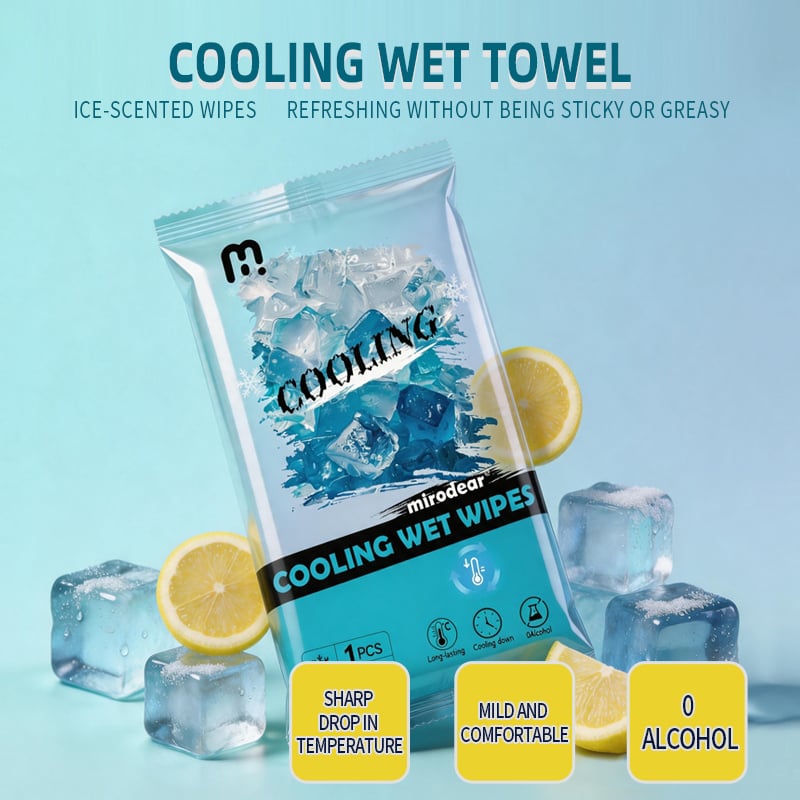
Mirodear contains no alcohol at all. It cools through the combined action of three ingredients — menthol, menthyl carboxamide and menthyl lactate:
Ingredient |
Function |
Characteristics |
Menthol |
Instant cooling onset |
Fastest acting; produces a cooling sensation within seconds of application |
Menthyl carboxamide |
Sustained cooling |
High cooling intensity and long duration, extending to about 3 hours |
Menthyl lactate |
Gentle transition and buffering |
Low irritation; the cooling arrives smoothly rather than abruptly |
Together the three follow a “fast onset – sustained output – gentle transition” logic: on the skin the cooling spreads evenly rather than delivering the sudden sharp chill of alcohol.
Camping means being outdoors all day, so the need for cooling is continuous. Pitching a tent in the sun brings on sweat within minutes. Unfold a Mirodear and hang it around your neck: a drop of about 4.5 °C cools the neck first, so you do not get more irritable the busier you are. The cooling lasts about 3 hours, so one wipe covers an entire afternoon of outdoor activity. Sitting by the campfire in the evening with the heat on your face, rub it with mineral water to re-activate it; about 70–80% of the cooling returns and it is ready to use again. As a camping cooling wipe, a single piece re-wetted a few times lasts the whole day — no need to carry a pile of single-use wipes.
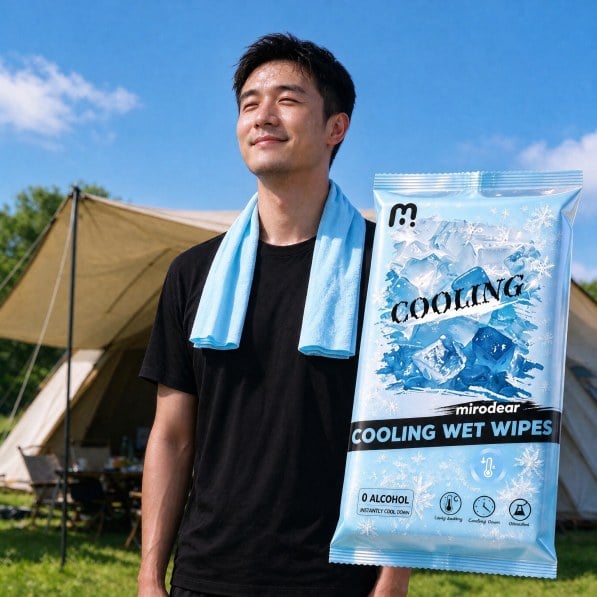
Hiking is sustained exertion: the higher the altitude, the stronger the UV and the more you sweat. At the summit you are radiating heat; unfold a Mirodear around your neck and the cooling spreads in about 3 seconds, bringing body temperature down from its peak far faster than natural heat loss would. The cooling holds steady for about 3 hours, so there is no need to top it up on the descent. As a hiking cooling towel, the 600×200 mm size folded around the neck does not interfere with trekking poles, and the alcohol-free formula does not sting even when skin is more fragile at altitude.

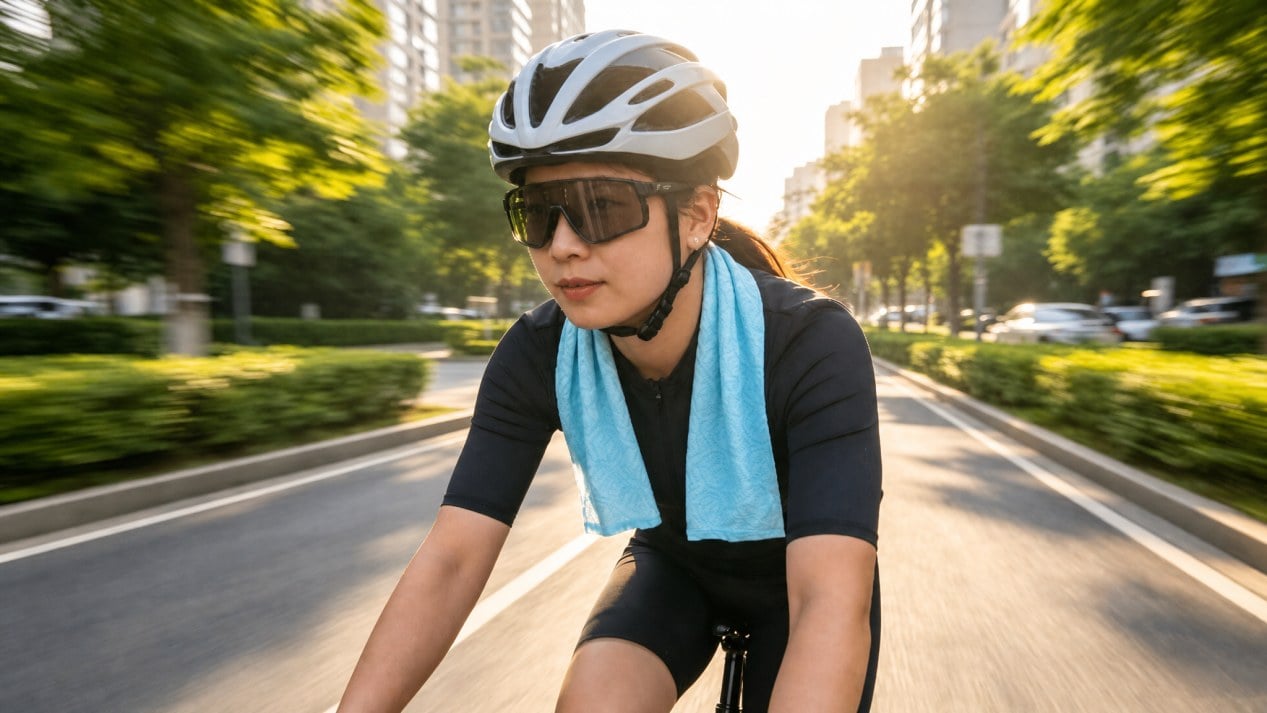
Cycling generates heat intermittently: body temperature spikes on a climb, the wind cools you on a descent, yet when you stop to rest the heat pushes out from inside. At a feed station, unfold a Mirodear and wipe your neck and wrists — a skin-surface drop of about 4.5 °C noticeably improves the quality of the rest: you genuinely cool down instead of getting hotter the longer you sit. One re-wetting keeps the cooling going, and a single wipe lasts through dozens of kilometres. As a cycling cooling wipe, the individual sachet slips into a jersey pocket and is ready whenever you need it.
City walks and gallery visits create intermittent but frequent cooling needs. Moving from outdoor heat into air conditioning is a big temperature swing, and stepping back outside it is hot again. Unfold a Mirodear around your neck: the cooling lasts about 3 hours and covers everything from blazing sun outside to stuffy heat indoors. Standing in the sun during the half-hour queue to get in, with the wipe around your neck, the heat does not keep building. As a city-walk cooling wipe, it is light enough that you do not need to set aside a pocket for it.

The hardest part of cooling down while travelling is getting your gear through. Spray bottles have volume limits and ice packs cannot go through security. Mirodear's individual sachets have no such restrictions and can be carried on high-speed trains and flights. At the destination, if the hotel air conditioning is not cool enough, unfold one around your neck: a drop of about 4.5 °C takes effect immediately, far faster than waiting for the room to cool down. As travel cooling wipes, one piece covers the whole day, from leaving home to returning to the hotel.
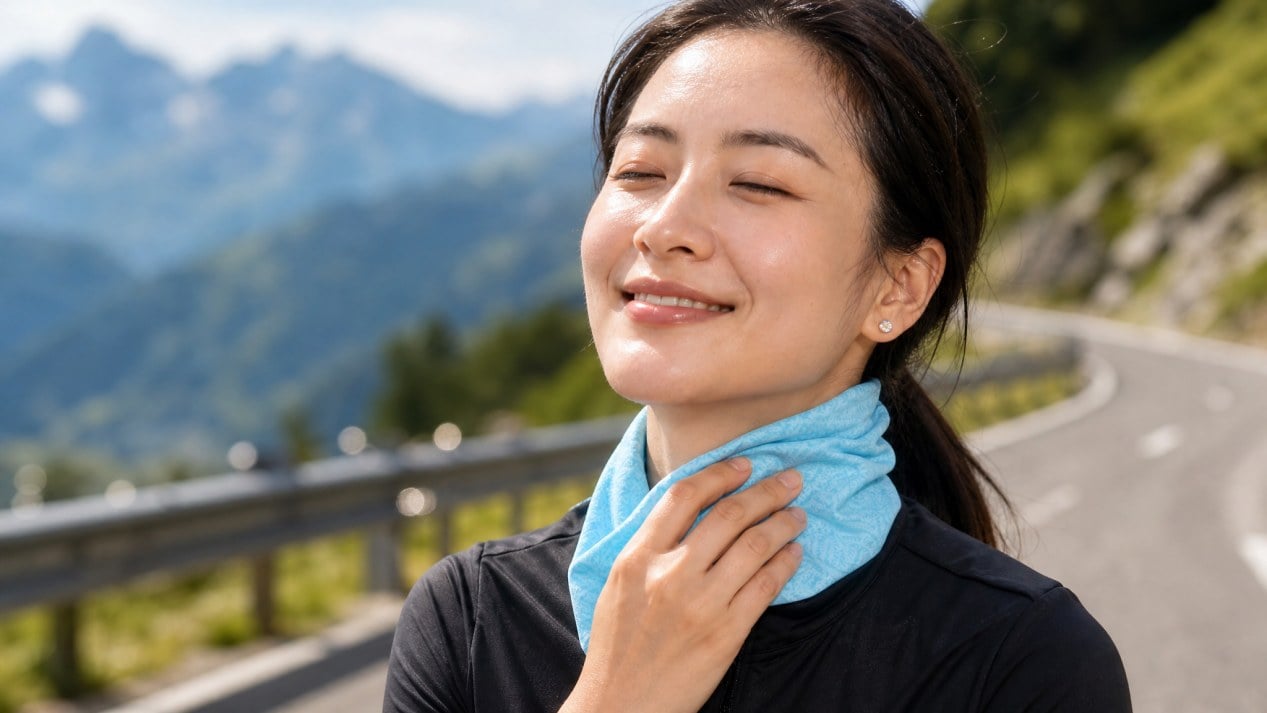
On the beach, sun exposure plus salt water reduces the skin's sensitivity to temperature change, but the heat is real. Coming out of the water, run a wipe over your wrists and neck: the menthol ingredients activate the cold receptors and the cooling spreads from the contact area. Worn around the neck in the sea breeze, the perceived temperature drops even faster. As a beach cooling wipe, the surface does not pick up sand, which makes it far more practical on the sand than a cooling patch.

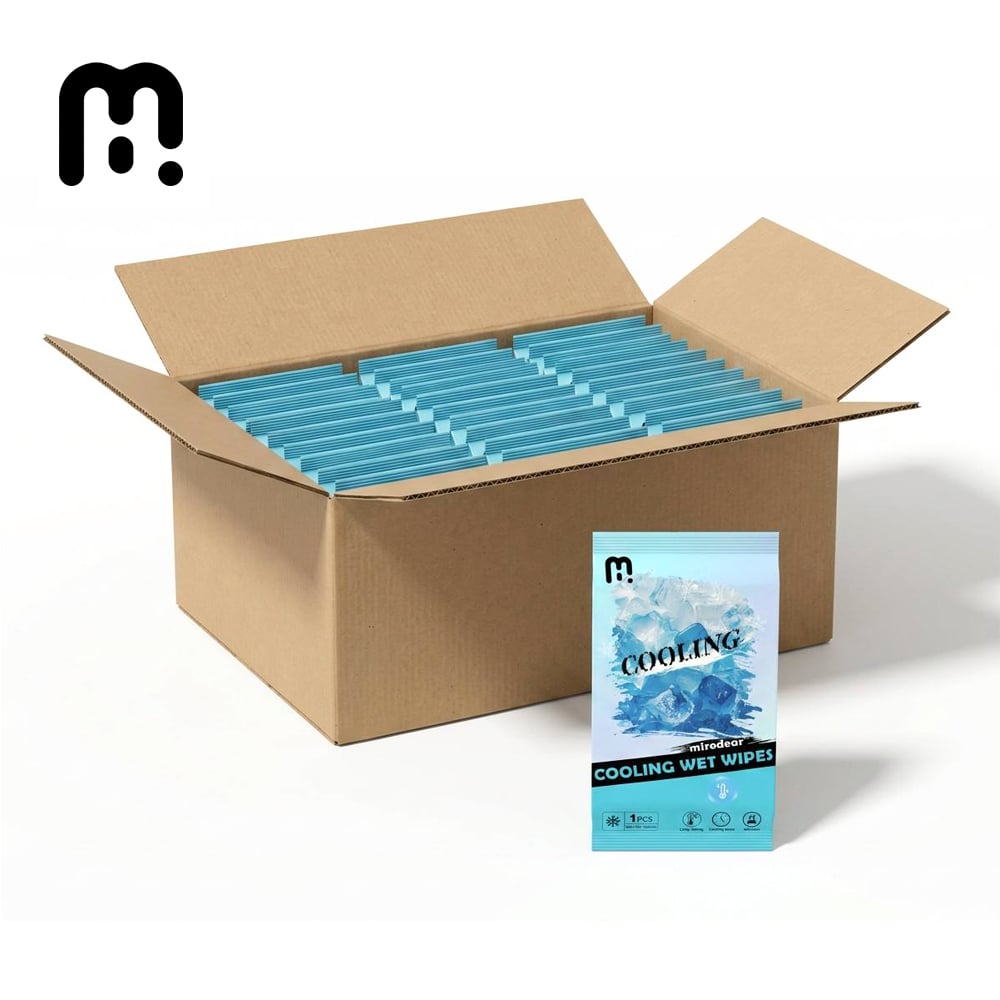
Single pack, minimum order quantity is 200 pieces. Customization is available. Welcome to inquire.

 EN