 ×
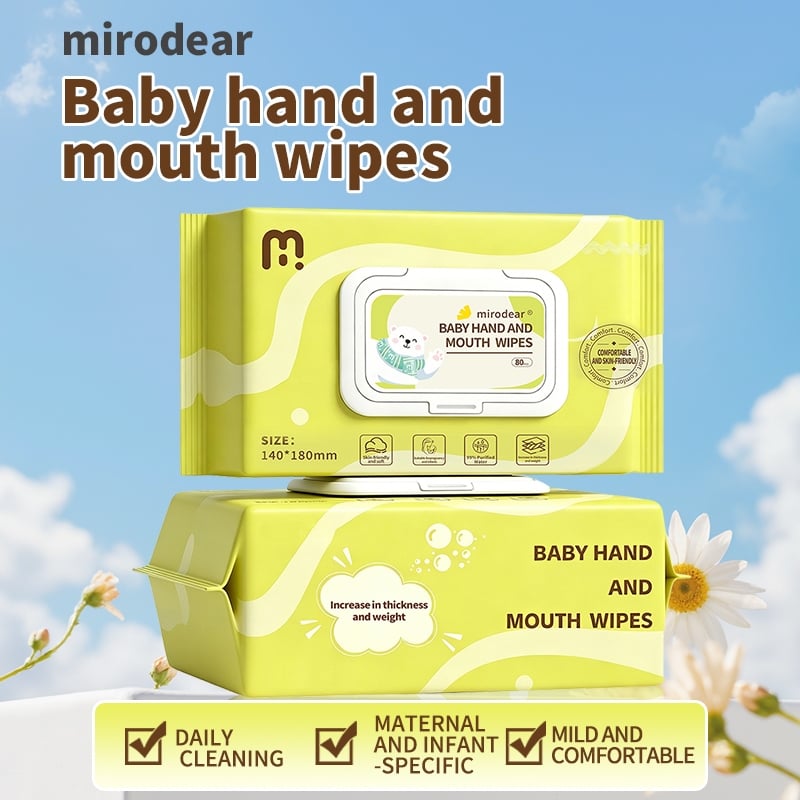
Can baby wipes be used to wipe the mouth? This article clearly explains the real differences between hand-and-mouth wipes and regular wipes.
Many parents, when wiping their child's mouth, will just grab a wet wipe off the table without a second thought. But have you ever considered whether that wipe was designed for mouths at all? The market is crowded with wipe categories: general cleaning wipes, hand-and-mouth wipes, and wipes made specifically for bottoms. Their packaging looks much the same, but the actual formulas and standards are an entire order of magnitude apart. Use the wrong one and the mild consequence is redness and itching; the severe consequence could be contact dermatitis. For infants and young children in particular, this is no small matter.
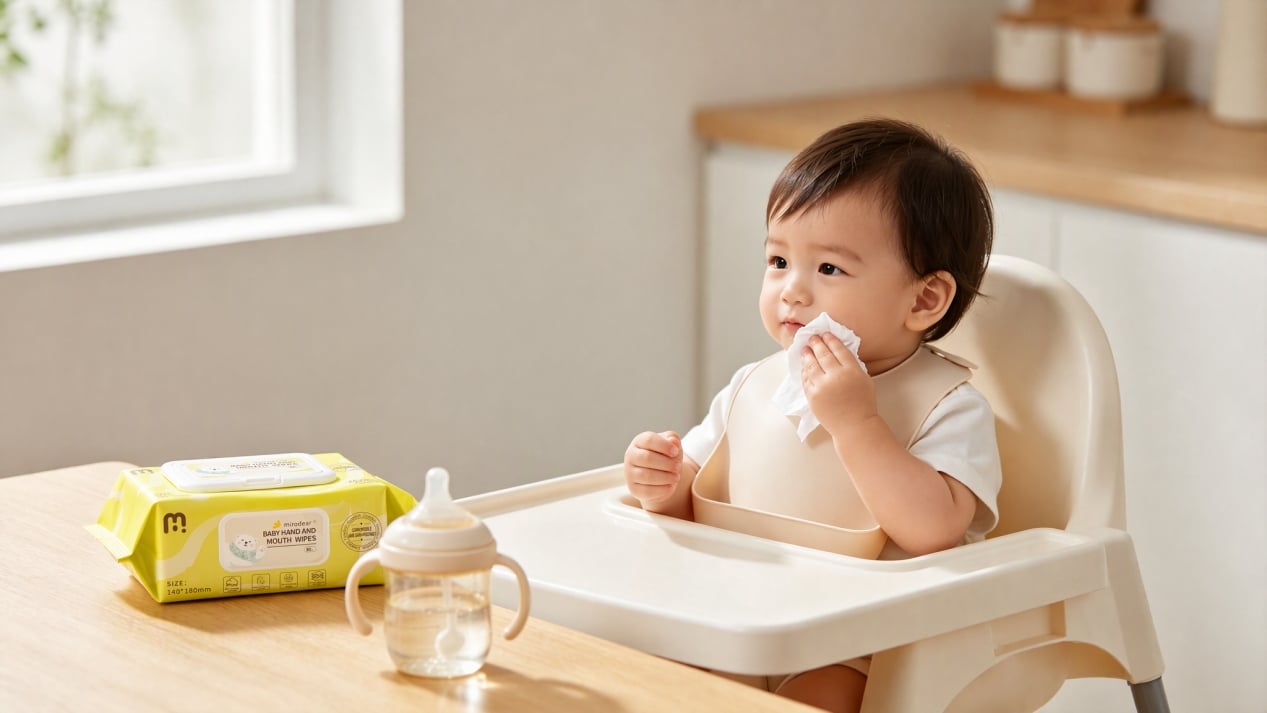
Regular wet wipes often contain alcohol, fragrances, chemical preservatives and other ingredients to achieve cleaning and antibacterial effects. Occasional exposure is generally harmless for adults, but the skin around an infant’s mouth is only about one-third as thick as adult skin, and the oral mucosa is thin and highly permeable. Alcohol can directly damage the fragile skin barrier; fragrances are common high-frequency allergens. Preservatives MIT (methylisothiazolinone) and CMIT (methylchloroisothiazolinone) carry a high sensitization rate and are banned in the EU for leave-on skincare products. After wiping their mouths, babies may rub their eyes or suck their hands, creating chances for these ingredients to enter their bodies.
First, water quality. The liquid in ordinary wet wipes is generally purified water or RO reverse-osmosis water. Compliant hand-and-mouth wet wipes usually use EDI ultrapure water. Starting from RO water, the process applies electrodeionization to further remove residual heavy-metal ions and microorganisms, achieving purity close to that of water for injection. Since the wipes come into contact with the mouth, water purity is the bottom-line safety requirement.
Second, ingredients. Hand-and-mouth wet wipes are formulated to meet “ingestion-grade safety” standards. The baseline requirement is the absence of alcohol, fragrances, colorants, optical brighteners, and controversial preservatives such as MIT/CMIT. Some products add food-grade xylitol — this is no mere marketing gimmick. As a natural sweetener, xylitol can inhibit Streptococcus mutans in the oral cavity and reduce the risk of tooth decay, with solid evidence to support these benefits. Vitamin E acts as an antioxidant and moisturizer, while aloe extract delivers soothing effects. These are value-adding extras; their absence will not compromise fundamental product safety.
Third, material quality. Ordinary wet wipes mostly use single-layer standard non-woven fabric, which is thin, easy to tear and prone to lint shedding. Quality hand-and-mouth wet wipes are made of thick cross-lapped non-woven fabric. Its fibers are interlaced into a three-dimensional mesh structure, delivering high tensile strength and zero lint shedding during use. If lint comes off while wiping a baby’s mouth, tiny fibers risk being inhaled or swallowed.
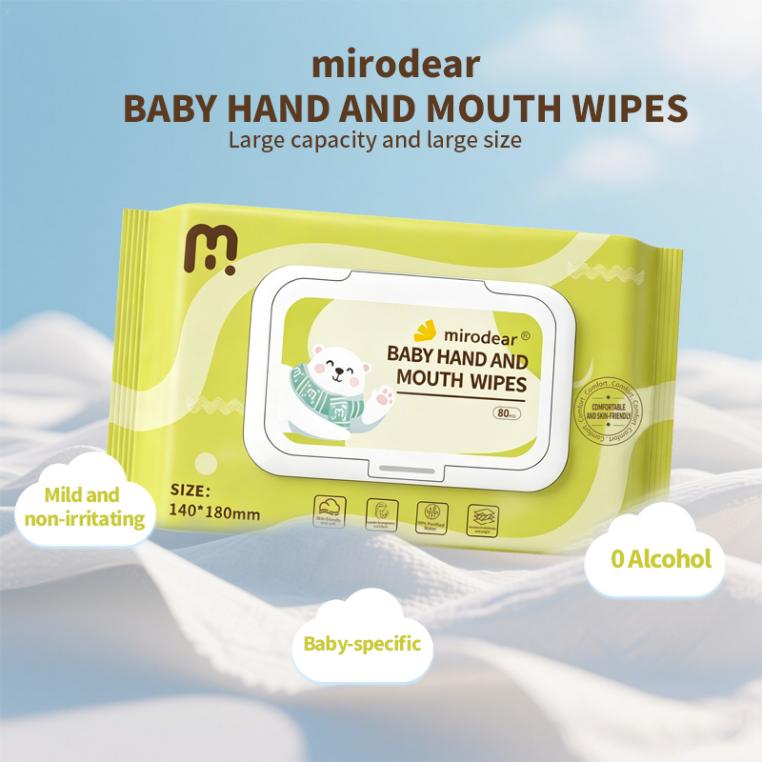
Many parents feel reassured when they see a list of “0-added” labels on packaging. It is important to note, however, that there is no unified national standard for the term “0-added” in the wet wipe industry. Different brands may exclude entirely different ingredients — and entirely different numbers of them — under this claim. Checking the ingredient list on the back of the package is far more reliable than trusting promotional slogans. Steer clear of wipes that contain any of these: ethanol (alcohol), fragrance/parfum, MIT, CMIT, and paraben preservatives. A clean-formula hand-and-mouth wipe usually has an ingredient list of no more than about ten items.
Wet wipes are not sterile products. Once opened, the humid environment encourages microbial growth. Use each wipe once and discard it; do not fold and reuse it for repeated wiping, as cross-contamination happens more easily than you might think. Besides, wet wipes cannot replace dedicated oral care. For babies’ gums before and during teething, special cleaning finger cots are recommended. Wipes are only for emergency cleanup of food residue around the mouth after meals.
Do not use ordinary wet wipes as a substitute for wiping babies’ mouths. To pick suitable hand-and-mouth wipes, follow three simple checks: verify the water quality, read the ingredient list, and test the fabric material.

 EN